AI Phone Answering for Restaurants: When AI Calls You
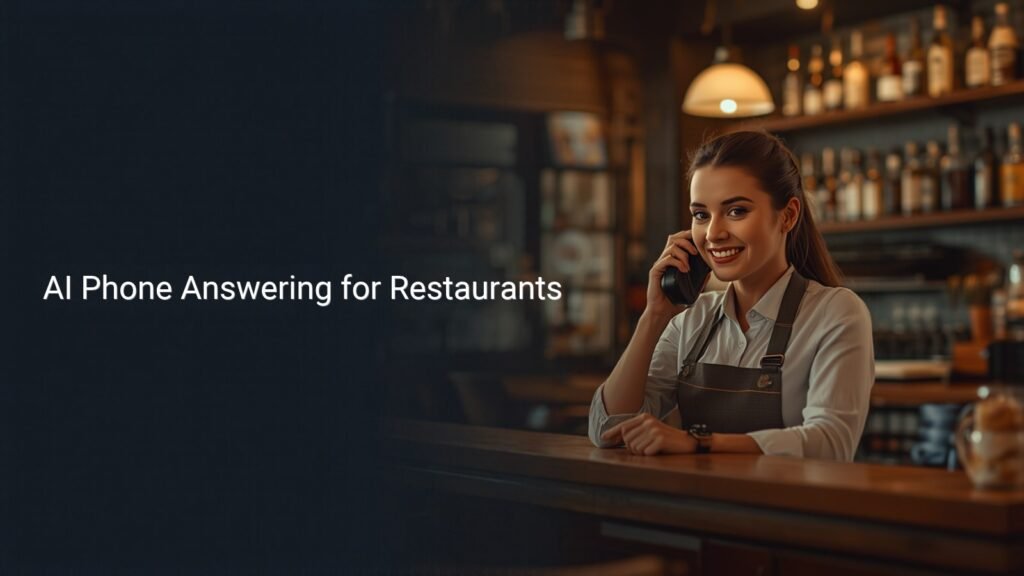
AI phone answering for restaurants means an AI voice agent picks up every call, answers common questions, takes simple orders or reservations, and passes anything tricky to your staff. It matters more this month because AI assistants have started calling restaurants on behalf of diners, so your phone line now has to work for both people and machines.
- In November 2026, Meta’s Muse agent began placing phone calls to US businesses, including restaurants, for paying subscribers, and OpenAI opened business profiles inside ChatGPT in beta.
- An AI phone answering system works like a host stand that never leaves the door: it handles hours, menu questions, orders and bookings while your team cooks and serves.
- Start with your top five call types, connect the AI to your menu and booking tools, and keep a clear handoff to a human for complaints, large parties and allergies.

What changed for restaurant phone lines this week?
Two announcements in the past few days show where restaurant calls are heading.
On November 13, 2026, The Decoder reported that Meta’s AI agent Muse can now place calls to US businesses for all paying Muse subscribers, naming restaurants among the places it calls. The same report notes that many businesses hang up as soon as they realize an AI is on the line. Back in September, Digital Trends described the feature being tested for restaurant reservations, appointments and customer service calls.
On November 12, 2026, Nation’s Restaurant News reported that OpenAI launched Businesses in ChatGPT in beta. Owners can claim a listing through Business Hub and edit their website, hours, location and description. OpenAI also offers Business Agents that chat with shoppers, but NRN notes that this part is currently limited to ecommerce and online services businesses, not restaurants.
Put together, the message for owners is simple: more of the people asking about your hours, menu and tables will soon be AI assistants asking on someone’s behalf. A restaurant that answers every call clearly, whoever is calling, keeps those guests. A restaurant that lets the phone ring out loses them quietly.
What is AI phone answering for restaurants, in plain terms?
Think of your phone line as a second front door. On a busy Friday, your host is seating a party of eight, a server is running food, and the phone rings for the fourth time in a minute. Someone has to choose between the guest in front of them and the guest on the phone.
AI phone answering is like hiring a host who only works that second door and never takes a break. It greets every caller, answers the questions you hear fifty times a day, writes down orders and bookings exactly as you trained it to, and walks over to a manager when a call needs a human. It does not replace your team. It keeps the phone from pulling them away from the dining room.
The same host also has to be polite to a new kind of guest: the concierge. When a diner asks Meta’s Muse or another assistant to book a table, that assistant calls you the way a hotel concierge would. An AI receptionist that recognizes these calls, answers them in a structured way and confirms details clearly is far more useful than one that hangs up.
What can an AI phone agent handle at a restaurant?
Most restaurant calls fall into a few repeat buckets. These are the ones that usually suit automation best:
- Hours, location and parking. The most common questions, and the easiest to answer consistently.
- Menu questions. Specials, gluten free options, portion sizes and whether a dish can be made vegetarian, based on menu notes you approve.
- Takeout and pickup orders. Reading back the order, confirming the pickup time and sending it to your point of sale or kitchen printer where your system supports it.
- Reservations and waitlist. Checking availability in your booking tool, taking the party size and name, and sending a text confirmation.
- Catering and private events. Collecting the date, headcount and budget, then routing a summary to the owner or events lead.
- After hours calls. Capturing messages and answering basics when nobody is in the building.
We cover the general setup in more depth in our guide to an AI receptionist for small business.
Which calls should still go to a person?
Good restaurant automation is as much about what the AI does not do. Set a clear handoff for these situations:
| Call type | Let the AI handle it? | Why |
|---|---|---|
| Hours, address, parking | Yes | Fixed answers that rarely change |
| Standard takeout order | Yes, with read back | Structured, and the AI can confirm every item |
| Reservation for 2 to 6 guests | Yes, if linked to your booking tool | Availability can be checked in real time |
| Severe allergy questions | Transfer to staff | Kitchen knowledge and accountability matter |
| Large parties and buyouts | Take details, then route | Pricing and deposits need a manager |
| Complaints and refunds | Transfer to staff | A guest who is upset wants a human |
Many restaurants use the same rule we recommend to dental offices using an AI answering service: automate the routine, escalate the sensitive.
How should restaurants prepare for AI assistants calling them?
You do not need to rebuild your restaurant around AI. A few practical steps make you easier to reach for both guests and their assistants:
- Do not train staff to hang up on AI. A call from an assistant is usually a real diner trying to book or order. Treat it like any other guest, or let your AI agent take it.
- Keep your public details consistent. Hours, holiday closures, menu links and phone numbers should match on your website, Google profile and anywhere else you are listed. If you can claim a listing in ChatGPT’s Business Hub, review it for accuracy.
- Write down your phone policies. Minimum party size for reservations, cutoff time for pickup orders, deposit rules for events. An AI agent can only follow rules that exist on paper.
- Connect the tools you already use. The most useful setups link the phone agent to your point of sale, online ordering and reservation system so orders and bookings do not need to be retyped.
- Review call summaries weekly. Look for questions the AI could not answer and add them to its knowledge base.
What should owners watch out for?
AI phone answering is helpful, but it is not magic, and the news coverage shows why care matters.
- Accuracy. An AI that guesses about ingredients or prices can create real problems. Limit answers to information you have approved.
- Disclosure and consent. Tell callers they are speaking with an automated assistant and follow call recording rules in your state. Some states require consent from everyone on a recorded call.
- Uneven reliability. Reports on Meta’s Muse note that some calls fail or get hung up on, and that Meta added trained human agents who can take over calls. Expect bumps on both sides of the line while this technology matures.
- Visibility claims. OpenAI told NRN that creating a ChatGPT profile does not guarantee better placement. Be skeptical of any vendor promising guaranteed traffic.
If you are still deciding whether a phone agent or a website chat tool makes more sense, our overview of an AI chatbot for small business compares the two.
How do you get started without disrupting service?
Start small. Pick the five call types you get most often, write approved answers for each, and run the AI agent during slower hours or after closing first. Listen to recordings, fix gaps, then extend it into the dinner rush once your team trusts it. Measure what matters to you, such as calls answered, orders captured and time your staff spends on the phone, rather than relying on vendor averages.
Enterprise 47 designs and configures AI receptionist systems that connect to the tools a restaurant already uses, with clear rules for when a human takes over.
Frequently asked questions
Can an AI phone agent take restaurant orders accurately?
It can handle standard takeout orders well when it reads each order back to the caller and is connected to an up to date menu. Complex modifications, allergy questions and large catering orders are better routed to staff.
Will customers be annoyed by an AI answering the phone?
Most callers want a fast, correct answer. Being upfront that an assistant is answering, keeping responses short and offering a quick way to reach a person helps keep the experience friendly.
What should a restaurant do when an AI assistant like Meta Muse calls?
Treat it as a real guest request. The assistant is usually booking or asking a question for a diner. Confirm details clearly, or let your own AI phone agent handle the call in a structured way.
Do restaurants need a ChatGPT business profile?
It is optional and still in beta. If you can claim your listing, check that your hours, location and description are correct. OpenAI says a profile does not guarantee better placement in results.
Curious whether an AI phone agent fits your restaurant? Explore our industry solutions or talk with the Enterprise 47 team about a practical setup for your location.